

 中
中 英
英



Rotary Electric Actuator for Electronic Engine Governor Systems
News and Exhibitions
2026.08.24


Microgrids increasingly combine renewable generation, battery storage, diesel generators, grid power, and changing electrical loads. While this combination improves energy flexibility, it also creates a difficult control challenge. Solar and wind output can fluctuate, battery charging and discharging must be coordinated, and conventional generators need to respond to changing demand without unnecessary fuel consumption. A new energy management system provides the intelligence needed to coordinate these resources and maintain a balanced power supply.
For industrial facilities, remote power sites, and distributed energy projects, effective dispatch is not simply about deciding which source should operate. It requires continuous awareness of generation, storage capacity, load demand, grid conditions, and operating priorities. Fortrust develops microgrid control solutions that coordinate photovoltaics, energy storage, diesel generators, and other power resources for both off-grid and grid-connected applications.
A microgrid can contain several power sources with very different operating characteristics. Renewable generation may change rapidly with weather conditions, while battery storage can respond quickly to short-term demand changes. Diesel or gas generators provide controllable generation but may become less economical when operated unnecessarily at low utilization.
An effective microgrid energy management solution therefore needs to coordinate these resources rather than manage each device independently. Intelligent dispatch can determine when renewable electricity should serve the load, when storage should charge or discharge, and when conventional generation should provide additional capacity. This coordinated approach helps maintain power balance while making better use of available energy.
| Energy resource | Main management consideration |
|---|---|
| Solar and wind | Variable renewable generation |
| Battery storage | Charging, discharging and energy reserve |
| Diesel or gas generation | Controllable backup and peak support |
| Grid connection | Import, export and operating conditions |
| Electrical loads | Demand variation and operating priority |
Energy dispatch is only as effective as the information behind it. A real-time energy management system can collect operating information from generation equipment, storage units, electrical loads, and grid-side equipment, giving operators a clearer view of current conditions.
Fortrust's microgrid solutions emphasize real-time monitoring, data analysis, intelligent dispatch, fault early warning, equipment management, and remote operation and maintenance. This creates a connection between field equipment and higher-level energy decisions, helping operators identify abnormal conditions before they develop into larger operational problems.
Real-time information is particularly valuable when load demand changes quickly. Instead of relying only on fixed operating schedules, the control strategy can respond to actual energy conditions. This makes microgrid power management more flexible and better suited to facilities where production loads, renewable output, or storage availability change throughout the day.
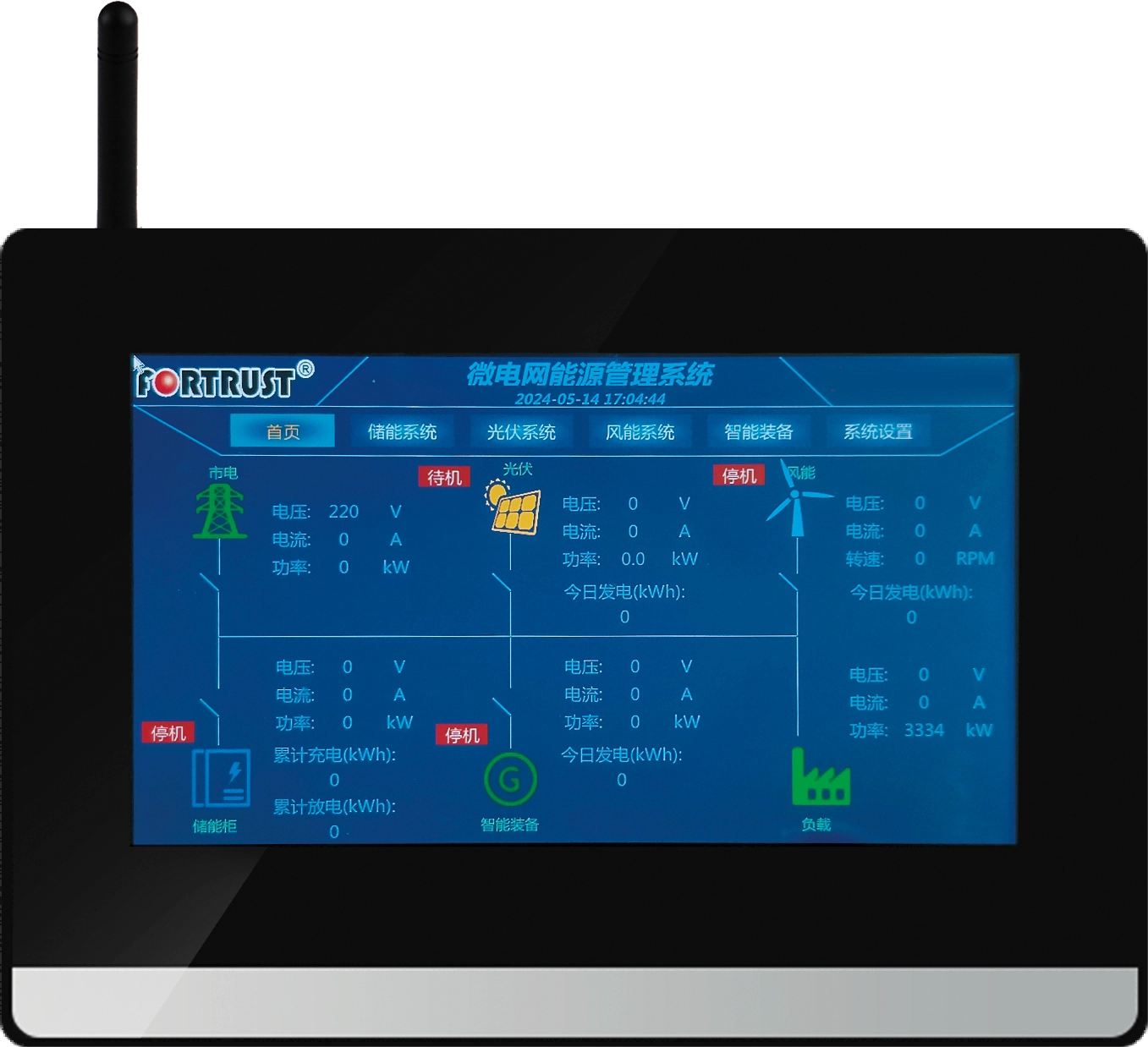
The growing use of renewable energy makes coordinated dispatch increasingly important. Solar generation can reduce dependence on conventional electricity during periods of strong sunlight, while energy storage can retain available energy for later use. When renewable output is insufficient, stored energy or controllable generation can help maintain the required supply.
This approach is especially relevant to solar and battery microgrid management, where energy availability changes throughout the day. A coordinated control layer can support renewable energy utilization while preserving sufficient reserve capacity. In hybrid configurations, diesel or gas generation can provide additional support when renewable resources and storage cannot fully meet demand.
The objective is not simply to maximize renewable generation at every moment. Practical dispatch must also consider power quality, load priorities, storage status, generator operating conditions, and continuity requirements. This broader approach creates a more balanced strategy for renewable energy integration and power dispatch.
Microgrid operating requirements vary significantly depending on whether a site is connected to a utility network. In an off-grid environment, maintaining supply-demand balance is essential because there may be no external source available to compensate for an energy shortage. Energy storage and controllable generation therefore become important parts of the dispatch strategy.
For off-grid energy management, coordinated control can help balance renewable generation, storage, generators, and electrical loads while responding to changes in demand. In grid-connected applications, the priorities can shift toward load management, renewable utilization, storage scheduling, and appropriate interaction with the utility grid.
Fortrust states that its microgrid solutions support both islanded and grid-connected operation, with coordinated management of diesel and gas generation, battery storage, photovoltaics, and wind power.
A capable energy management platform should do more than display operating data. The real value comes from turning data into actionable control decisions. This includes identifying abnormal operating conditions, analyzing energy consumption, supporting dispatch strategies, and providing information for operation and maintenance.
For industrial users, this can help address several common challenges at the same time: fluctuating renewable output, inefficient generator operation, limited visibility into energy consumption, unexpected equipment conditions, and rising operating costs. Fortrust's published microgrid solutions include functions covering data monitoring, intelligent scheduling, fault warning, energy efficiency assessment, and maintenance management.
The future of distributed energy management depends increasingly on coordination between generation, storage, loads, and digital control. A new energy management system can serve as the coordination layer that connects these different resources and converts operational data into timely dispatch decisions.
Fortrust focuses on integrated microgrid control solutions for distributed energy scenarios, including photovoltaic generation, energy storage, diesel generation, and remote monitoring. Its wider solution portfolio also combines power control, IoT, energy storage microgrids, and cloud-based operation and maintenance capabilities.
For project owners, EPC contractors, power integrators, and industrial energy managers, this approach provides a practical foundation for designing microgrids around actual load characteristics rather than treating each energy asset as an isolated unit.
It coordinates multiple energy resources such as renewable generation, battery storage, conventional generators, grid power, and electrical loads. Its purpose is to improve visibility, dispatch control, energy utilization, and operational stability.
By continuously evaluating generation, storage, load demand, and grid conditions, intelligent dispatch can coordinate different energy resources instead of operating them independently.
Yes. Off-grid applications require continuous power balancing because external grid support may not be available. Coordinated control can manage renewable energy, storage, generators, and loads according to changing operating conditions.
Typical applications include industrial facilities, remote power sites, distributed energy projects, energy storage installations, and locations requiring coordinated renewable and conventional generation.
Important considerations include the number and type of energy resources, load characteristics, storage requirements, grid connection conditions, monitoring needs, dispatch strategy, protection functions, and long-term operation and maintenance requirements.