

 中
中 英
英



New Energy Management System for Smarter Microgrid Power Dispatch
News and Exhibitions
2026.09.16


An engine speed control system plays an essential role in maintaining stable engine operation, coordinating output with changing loads, and supporting reliable performance in industrial and power generation applications. When speed regulation becomes unstable, equipment may experience unnecessary fluctuations, inefficient operation, increased component wear, or unexpected downtime. Improving control performance therefore requires more than adjusting individual settings; it involves coordinated attention to maintenance, parameter tuning, hardware condition, and operational management.
For industrial operators, effective engine speed control optimization begins with understanding how each component influences overall regulation accuracy. Sensors provide feedback, control modules process operating signals, and actuators respond to adjustment commands. Any weakness in this process can affect speed stability and response time. A structured optimization strategy helps maintain accurate feedback, improve load adaptability, and reduce maintenance costs throughout the equipment's service life.
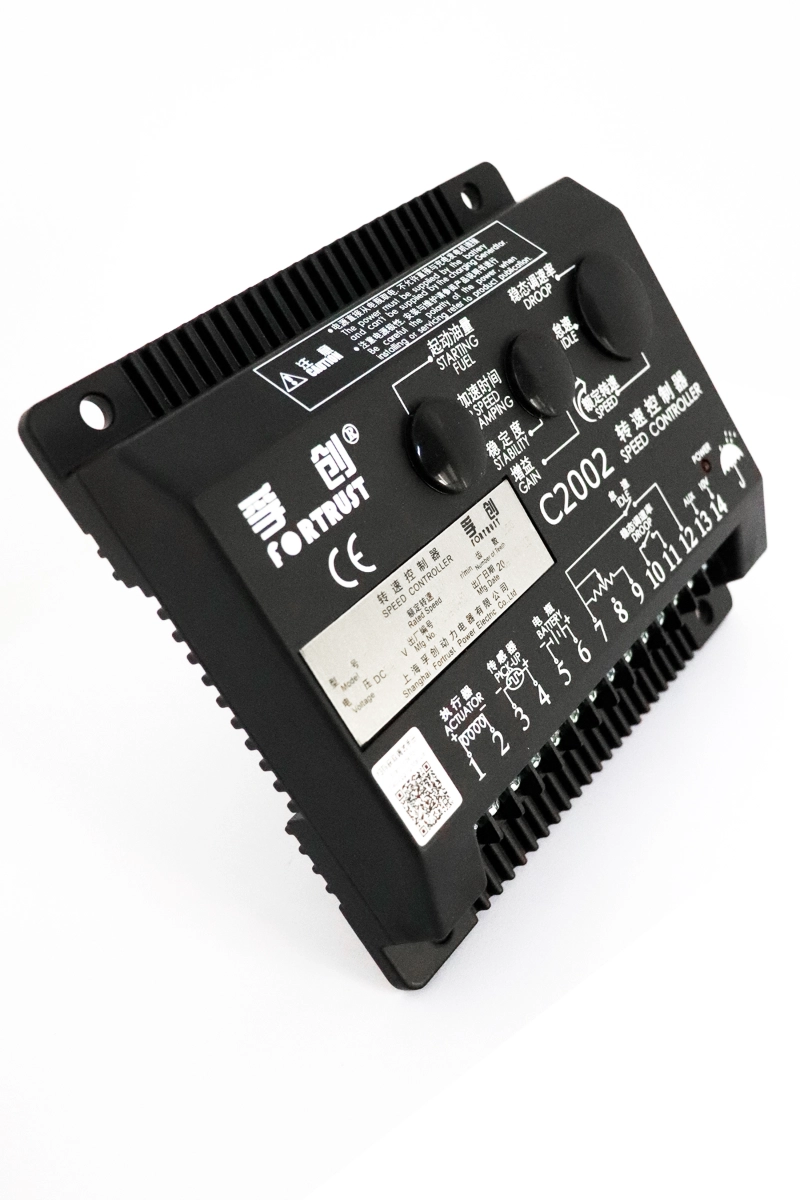
Regular inspection is a fundamental step in improving engine speed controller performance. Loose electrical connections, deteriorating cables, contaminated sensors, and aging control components can interfere with signal transmission and cause inconsistent regulation. Establishing a preventive maintenance schedule allows technicians to identify developing problems before they affect normal operation, reducing the likelihood of unexpected shutdowns.
Maintenance should prioritize components directly involved in speed measurement, signal processing, power delivery, and output adjustment. Inspection records should document component condition, detected abnormalities, corrective actions, and replacement dates. Preventive component replacement is particularly valuable when parts show measurable deterioration or have reached their recommended service intervals. This approach supports consistent control accuracy while avoiding unnecessary replacements based solely on assumptions.
Correct parameter configuration enables an engine speed control system to respond appropriately to operating demands. Settings that work under light loads may produce excessive fluctuations or delayed responses when demand increases. Technicians should therefore evaluate control parameters against actual load characteristics, expected speed changes, and operating requirements rather than relying on a single configuration for every condition.
Load matching also helps prevent unnecessary acceleration, unstable speed recovery, and frequent starting or stopping. Where operating data is available, engineers can compare target speed, measured speed, load variation, and response time to identify opportunities for adjustment. Real-time operating data can support more informed decisions, allowing technicians to refine control settings according to changing conditions while maintaining appropriate operating limits.
Control algorithms determine how the controller responds when actual engine speed deviates from its target. Poorly tuned settings may cause overshoot, prolonged recovery, or repeated speed oscillations. Optimizing the proportional, integral, and derivative components of PID control can improve response characteristics, provided that adjustments are made carefully and verified under representative operating conditions.
Adaptive control offers another approach when loads or operating conditions vary significantly. By adjusting control behavior according to changing conditions, adaptive techniques can help maintain consistent regulation without requiring repeated manual intervention. However, algorithm selection should reflect the engine's characteristics, available feedback signals, and required response speed. Effective speed regulation tuning balances fast correction with stability instead of prioritizing rapid response at the expense of reliable operation.
Hardware limitations can restrict the benefits of software and parameter optimization. Low-resolution or inconsistent sensors may provide inaccurate speed feedback, making precise regulation difficult even when the control logic is properly configured. Replacing unsuitable sensors with more accurate and reliable alternatives can improve measurement quality and help the controller respond to actual operating conditions.
Modular hardware architecture can also simplify maintenance and future upgrades. Separating key functional components makes it easier to inspect, replace, or expand individual sections without redesigning the entire control arrangement. Before implementing an upgrade, engineers should verify electrical compatibility, signal requirements, environmental suitability, and integration with existing equipment. A carefully planned engine speed controller upgrade should improve measurable performance while minimizing installation complexity and operational disruption.
Excessive heat can accelerate electronic component degradation, affect measurement accuracy, and shorten the service life of control equipment. Appropriate ventilation, heat dissipation arrangements, and correctly selected cooling fans help maintain suitable operating temperatures. Cooling requirements should be assessed according to equipment power consumption, installation conditions, ambient temperature, and expected operating load.
Environmental protection is equally important in industrial applications where dust, moisture, vibration, or corrosive substances may affect electrical connections and sensitive components. Suitable enclosures, sealing arrangements, and installation practices help reduce exposure to these hazards. Thermal management and environmental protection should be treated as complementary measures because effective cooling must not compromise the required protection against external contaminants. Regularly checking ventilation paths and enclosure integrity helps preserve long-term reliability.
Intelligent monitoring can improve visibility into engine operating conditions and help maintenance teams identify abnormal behavior earlier. By connecting suitable monitoring equipment to gateways or cloud platforms, operators can review relevant information remotely, including speed deviations, load changes, temperature trends, and controller status where supported by the installed equipment.
Alarm thresholds should reflect operating limits and the severity of potential faults. Excessively sensitive settings can generate repeated notifications, while thresholds that are too broad may delay intervention. A well-configured remote engine speed monitoring solution should distinguish routine fluctuations from conditions requiring attention. Historical data and alarm records can then support fault analysis, maintenance planning, and parameter adjustments based on observed operating behavior rather than guesswork.
Even a technically capable controller can underperform when operators lack consistent procedures for configuration, inspection, and troubleshooting. Regular training should cover normal operating conditions, parameter adjustment principles, alarm interpretation, and the correct response to abnormal speed behavior. Personnel should also understand which adjustments require qualified technical support and which activities can be performed during routine inspections.
Standard operating procedures help ensure that maintenance and troubleshooting remain consistent across shifts and personnel. Records should include configuration changes, inspection findings, fault symptoms, and corrective measures. Reviewing these records makes recurring problems easier to identify and reduces the risk of errors caused by undocumented adjustments. Operator training and standardized maintenance practices therefore complement technical improvements by helping preserve performance over time.
The following table summarizes the main objective of each method and the performance factor it primarily addresses.
| Optimization method | Primary objective | Key performance factor |
|---|---|---|
| Routine maintenance | Identify wear and connection problems | Reliability |
| Parameter tuning | Match regulation to actual loads | Speed stability |
| Algorithm optimization | Improve response and correction | Regulation accuracy |
| Hardware upgrades | Strengthen feedback and expandability | Measurement quality |
| Thermal and environmental protection | Reduce heat and contamination risks | Component lifespan |
| Intelligent monitoring | Detect abnormal operating conditions | Fault response |
| Staff training | Standardize operation and maintenance | Operational consistency |
These methods are most effective when implemented as a coordinated improvement plan. Maintenance establishes a reliable baseline, parameter tuning and algorithm adjustments refine regulation, and hardware improvements address physical limitations. Monitoring provides ongoing performance information, while environmental protection and staff training help sustain the results. Continuous evaluation of engine speed control performance allows organizations to prioritize improvements according to actual operating risks and measurable needs.
Common causes include inaccurate sensor feedback, unsuitable control parameters, changing loads, electrical connection problems, and poorly tuned control algorithms. A structured inspection should examine both hardware condition and configuration settings before corrective adjustments are made.
Inspection frequency depends on operating hours, environmental conditions, manufacturer recommendations, and the consequences of equipment failure. Regular scheduled checks should be supplemented by inspections following abnormal alarms, maintenance work, or significant changes in operating conditions.
PID tuning adjusts how the controller responds to speed deviations. Appropriate settings can reduce overshoot, improve recovery, and limit oscillation, although the final configuration must be validated under representative operating conditions.
Remote monitoring helps operators review operating trends, identify abnormal conditions, and investigate faults without relying exclusively on on-site observations. Its effectiveness depends on suitable sensors, reliable communications, and properly configured alarms.
Fortrust provides intelligent control solutions for generator and power equipment applications. Selecting appropriate control equipment, maintaining accurate operating feedback, and following sound commissioning and maintenance practices can help users improve speed regulation, operational reliability, and long-term equipment performance.