

 中
中 英
英



Generator Set Controller for Remote Monitoring and Cloud Management
News and Exhibitions
2026.06.26


In diesel generator sets, stable engine speed directly affects generator frequency, load response, fuel control, and overall operating reliability. As electrical demand changes, the engine must respond quickly while keeping rotational speed within the required range. A diesel engine electronic governor performs this task by monitoring engine speed and adjusting fuel delivery through an actuator, allowing the engine to respond to changing load conditions with controlled and predictable operation.
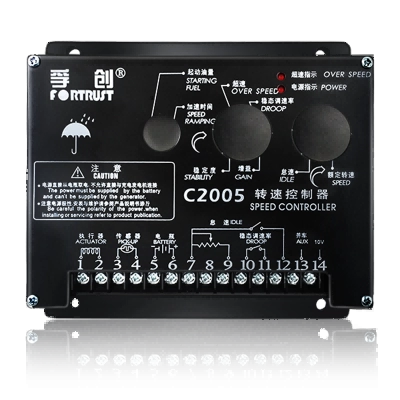
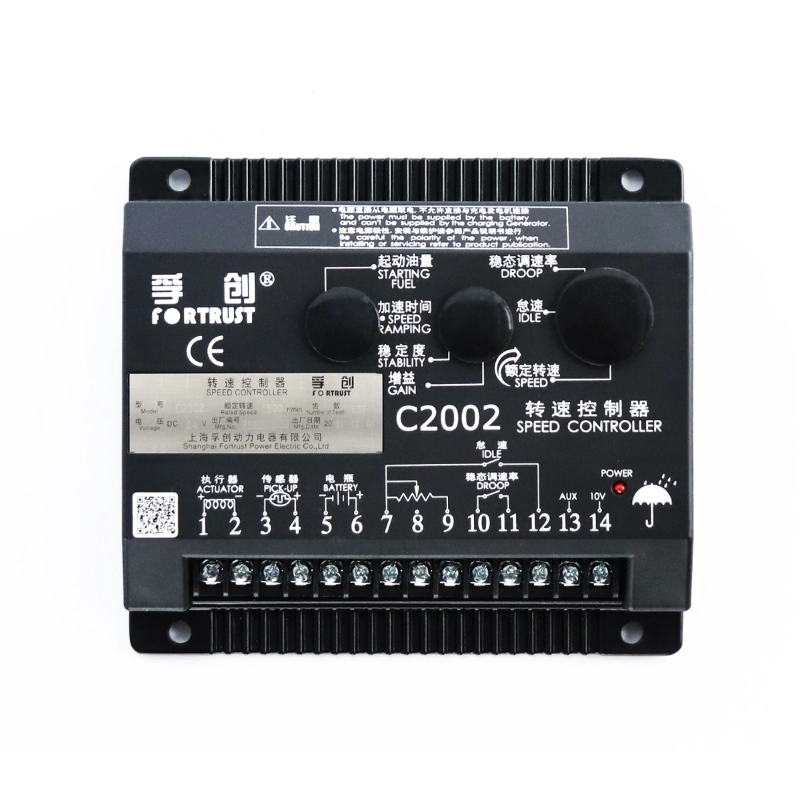
Fortrust C2002 is one solution designed specifically for diesel engine speed regulation in genset applications. Alongside established international suppliers, Fortrust provides electronic governor technology covering speed adjustment, acceleration control, starting fuel management, overspeed protection, and parallel operation. When evaluating suppliers, users should consider not only speed accuracy but also engine compatibility, actuator response, protection functions, environmental adaptability, commissioning requirements, and long-term service support.
Fortrust focuses on electronic engine speed control for diesel generator applications, with the C2002 electronic governor designed to provide closed-loop regulation between engine speed detection and fuel actuator movement. The controller continuously compares the actual speed signal with the preset reference and generates a corresponding output to the actuator. This feedback process allows fuel delivery to be adjusted as engine conditions change.
The C2002 supports several functions that are important for generator operation, including speed fine-tuning, starting fuel adjustment, acceleration control, overspeed protection, high- and low-speed switching, and parallel operation. Its speed fluctuation rate can reach ≤ ±0.25%, while the steady-state speed regulation rate can be adjusted within a 0–5% range. These adjustment capabilities give users greater flexibility when matching the governor to different diesel engines and genset configurations.
Environmental compatibility is another consideration when selecting an electronic governor for gensets. The C2002 is designed for ambient temperatures from -40°C to +85°C and ambient humidity below 95%. It supports DC 24V or DC 12V power supply configurations within their specified operating ranges, with controller power consumption below 0.2A excluding the actuator.
Woodward is an established supplier of engine control and generator-related technologies, with electronic speed control products used across a wide range of engine applications. Its governor solutions are designed to regulate engine speed and respond to changes in load, making them suitable for applications where consistent frequency and controlled engine response are important.
A key consideration with an established governor supplier is compatibility between the controller, actuator, speed sensor, and diesel engine. In generator applications, speed regulation cannot be evaluated independently from the fuel delivery mechanism. Proper matching allows the governor to provide predictable response during starting, acceleration, loading, and unloading.
ComAp provides control technologies for generator applications, including functions related to engine speed management, load sharing, monitoring, and generator operation. Its products are commonly associated with applications where several control functions need to work together across different operating conditions.
For users selecting an electronic engine governor supplier, the practical issue is whether the required speed control functions can be coordinated effectively with the rest of the generator controls. Load changes, operating modes, alarms, and parallel generation requirements can all influence the desired governor configuration. Proper communication and parameter coordination should therefore be considered during integration.
DEIF is a Danish supplier serving power generation and other engine-driven applications. Its generator control technologies focus on operational control, protection, synchronization, and monitoring, with solutions applicable to both land-based and marine power generation.
When assessing a supplier for diesel generator applications, protection functions deserve the same attention as normal speed regulation. Overspeed conditions can create serious mechanical risks, while incorrect speed feedback can affect control stability. A suitable governor should therefore support dependable speed sensing, appropriate protective logic, and predictable actuator response under abnormal operating conditions.
Perkins is widely recognized for diesel engines used in power generation and industrial applications. Its engine-related control technologies are designed around compatibility with its engine platforms, making engine and control integration an important consideration for users working with Perkins-powered gensets.
For smaller and medium-sized generator applications, buyers often consider ease of installation, service requirements, engine compatibility, and availability of replacement components alongside speed regulation performance. The appropriate electronic governor should provide the required control response without creating unnecessary complexity during commissioning or maintenance.
A supplier comparison should begin with the actual operating requirements of the genset rather than relying only on brand recognition. Different engines use different actuators, speed sensors, fuel mechanisms, and control arrangements. Even when two governors provide similar basic functions, their electrical characteristics and response behavior may differ significantly.
| Evaluation Factor | Key Consideration |
|---|---|
| Speed regulation | Stability during rated and variable loads |
| Load response | Reaction to sudden load changes |
| Actuator compatibility | Voltage, current, travel, and response |
| Speed sensing | Sensor type and signal characteristics |
| Overspeed protection | Threshold and shutdown arrangement |
| Starting control | Starting fuel and acceleration adjustment |
| Parallel operation | Manual or automatic operating requirements |
| Environment | Temperature, humidity, and installation conditions |
Correct integration is just as important as selecting the governor itself. The speed sensor must provide a clean and appropriate signal, while actuator wiring must match the controller's electrical requirements. Poor grounding, electrical interference, incorrect polarity, or unsuitable actuator characteristics can result in unstable speed response.
Commissioning should normally proceed from basic speed detection and actuator movement to starting fuel, acceleration, steady-state regulation, and protection settings. Parameters should be adjusted according to the actual engine characteristics instead of applying identical settings to every genset. This approach can improve response consistency and reduce unnecessary troubleshooting during operation.
For a diesel generator electronic governor, several functions have direct practical value. Closed-loop speed regulation helps compensate for changes in engine operating conditions, while acceleration adjustment controls how quickly the engine approaches its target speed. Starting fuel adjustment can also help manage fuel delivery during startup and reduce excessive smoke caused by unsuitable settings.
Protection functions are equally important. When engine speed reaches a configured overspeed threshold, the controller can respond by removing actuator power and initiating shutdown according to the installed protection arrangement. Speed signal loss or controller power loss may also be incorporated into shutdown logic depending on the specific configuration.
For parallel generator operation, the governor must provide a predictable response to changing operating conditions. Both manual and automatic arrangements may be used depending on the overall control architecture, making accurate commissioning and parameter adjustment particularly important.
Speed accuracy is only one part of governor performance. A practical electronic governor for diesel generators should be evaluated according to its compatibility, response characteristics, protection functions, environmental range, installation requirements, and available technical support.
Fortrust C2002 combines closed-loop speed regulation with adjustable starting fuel, acceleration control, overspeed protection, and functions for parallel genset applications. These features make it relevant to generator manufacturers, control-panel integrators, maintenance teams, and power equipment users looking for a configurable approach to diesel engine speed control.
What does a diesel engine electronic governor do?
It detects engine speed and adjusts fuel delivery through an actuator to maintain the required operating speed under changing conditions.
Why is closed-loop speed regulation important for gensets?
It allows the controller to respond to actual engine speed changes rather than relying only on a fixed fuel setting, helping maintain stable operation when the load changes.
What functions does the Fortrust C2002 provide?
The C2002 supports speed fine-tuning, starting fuel adjustment, acceleration control, overspeed protection, high- and low-speed switching, and parallel operation functions.
Can an electronic governor help control generator frequency?
Yes. Because generator frequency is directly related to engine rotational speed, stable engine speed regulation contributes to maintaining the required generator frequency.
What should be checked before selecting a governor?
Users should verify engine compatibility, actuator characteristics, speed sensor signals, power supply, protection requirements, environmental conditions, and the intended operating mode.
Is C2002 suitable for parallel generator applications?
The C2002 supports functions for parallel genset operation, with the specific control arrangement depending on the generator configuration and commissioning requirements.