

 中
中 英
英



Intelligent Emergency Protection & Power Safeguard: Fortrust
Company News
2026.05.11


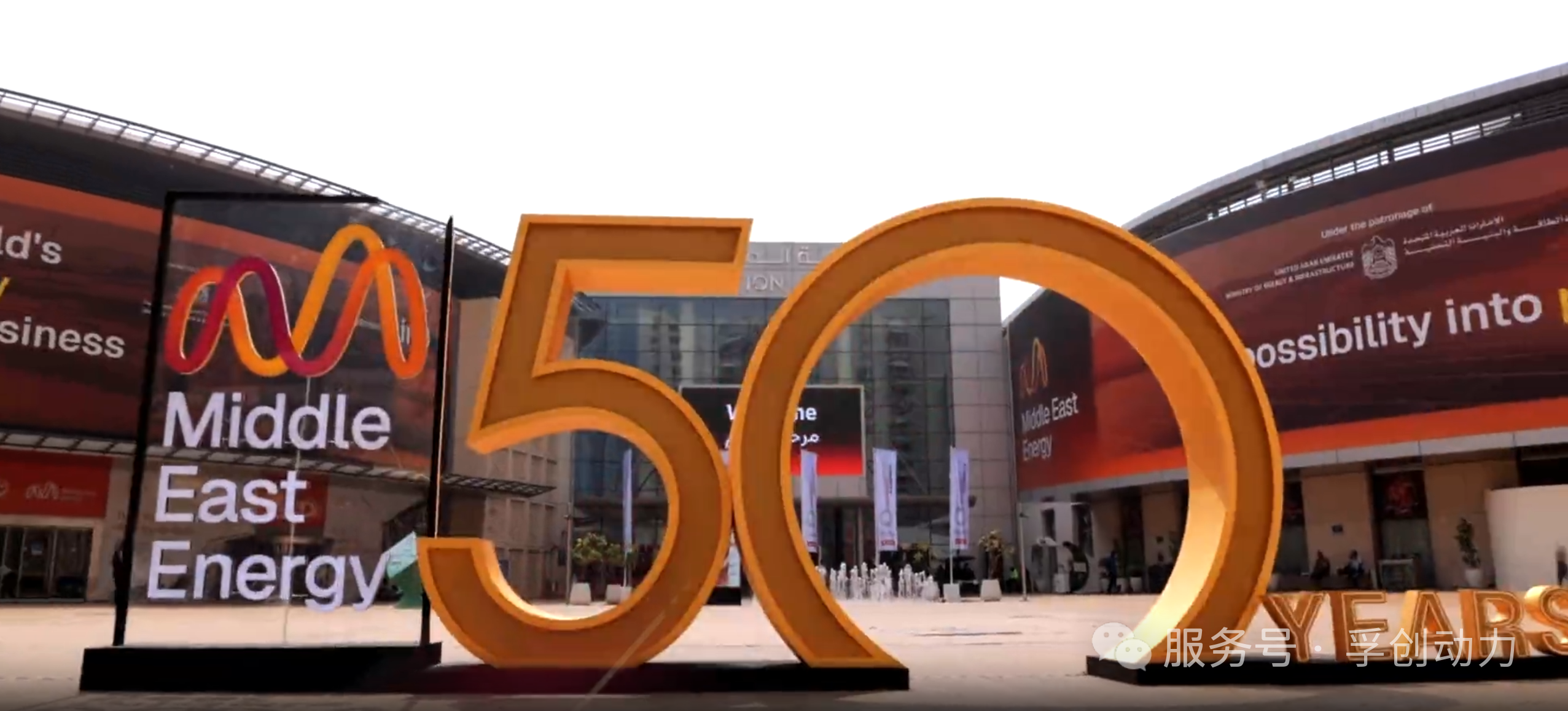
The 50th edition of Middle East Energy took place at Dubai World Trade Centre, September 1–3, 2026.
Middle East Energy (MEE) Dubai 2026 — the region's largest power and energy exhibition — has just wrapped up its milestone 50th edition at the Dubai World Trade Centre. Over three days, more than 1,900 exhibitors and an estimated 35,000 energy professionals from over 150 countries gathered to source technologies, compare suppliers and build partnerships across the full power value chain, alongside co-located shows The Battery Show Middle East and Intersolar Middle East.
At Booth S3.B60, Fortrust Power Control Technology (Qidong) Co., Ltd. presented a complete lineup for high-temperature, complex-duty applications: a full range of power control hardware, an integrated microgrid solution, and professional power plant O&M services. Throughout the show, our team held one-on-one discussions with customers from the Middle East, North Africa and neighboring regions on project conditions, equipment selection, customized solutions and localized service.
Event: Middle East Energy Dubai 2026 (50th edition)
Dates: September 1–3, 2026
Venue: Dubai World Trade Centre, United Arab Emirates
Booth: S3.B60
On display: Microgrid total solution, genset controllers and control systems, power plant O&M services
Summer ambient temperatures across the Gulf routinely reach 45–50 °C, and inside a sealed outdoor control cabinet the temperature can climb past 70 °C. At these levels, the weak points of ordinary control electronics are exposed quickly: as a rule of thumb, the service life of electrolytic capacitors roughly halves for every 10 °C rise in operating temperature, LCD screens lose contrast, and standard components drift out of specification. Add wind-blown sand, coastal humidity and salt air, and the failure modes multiply.
At the same time, the region's energy landscape is changing fast. Under the UAE Energy Strategy 2050 and Saudi Vision 2030, Gulf states are adding renewables and storage at scale — yet oilfields, mining camps, construction sites and island resorts still depend on engine-driven power far from any utility grid. The result is a market that demands two things at once: generator control hardware that survives extreme heat and dust, and microgrid-level intelligence that can coordinate diesel, gas, solar, wind and storage without an on-site engineer.
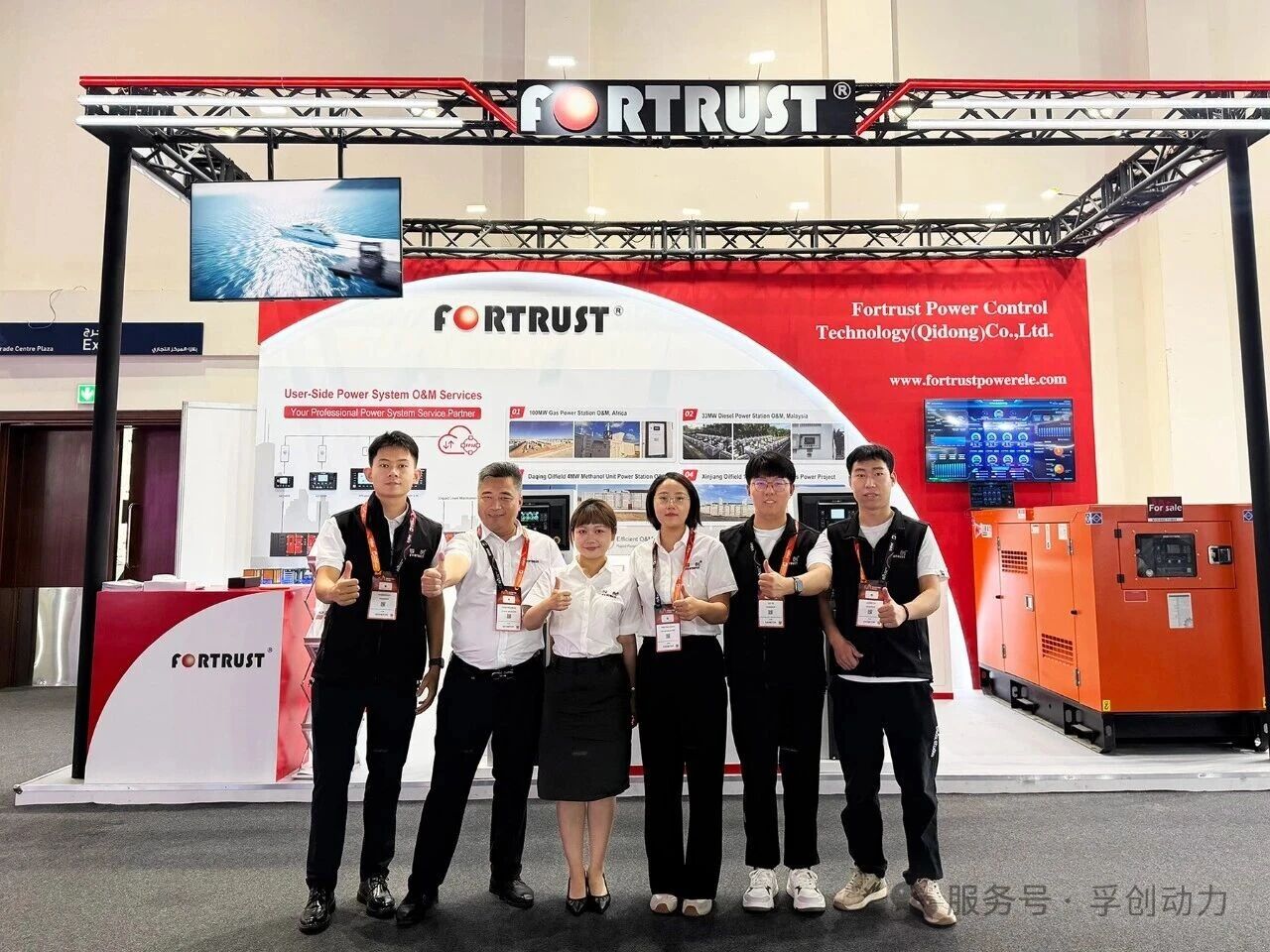
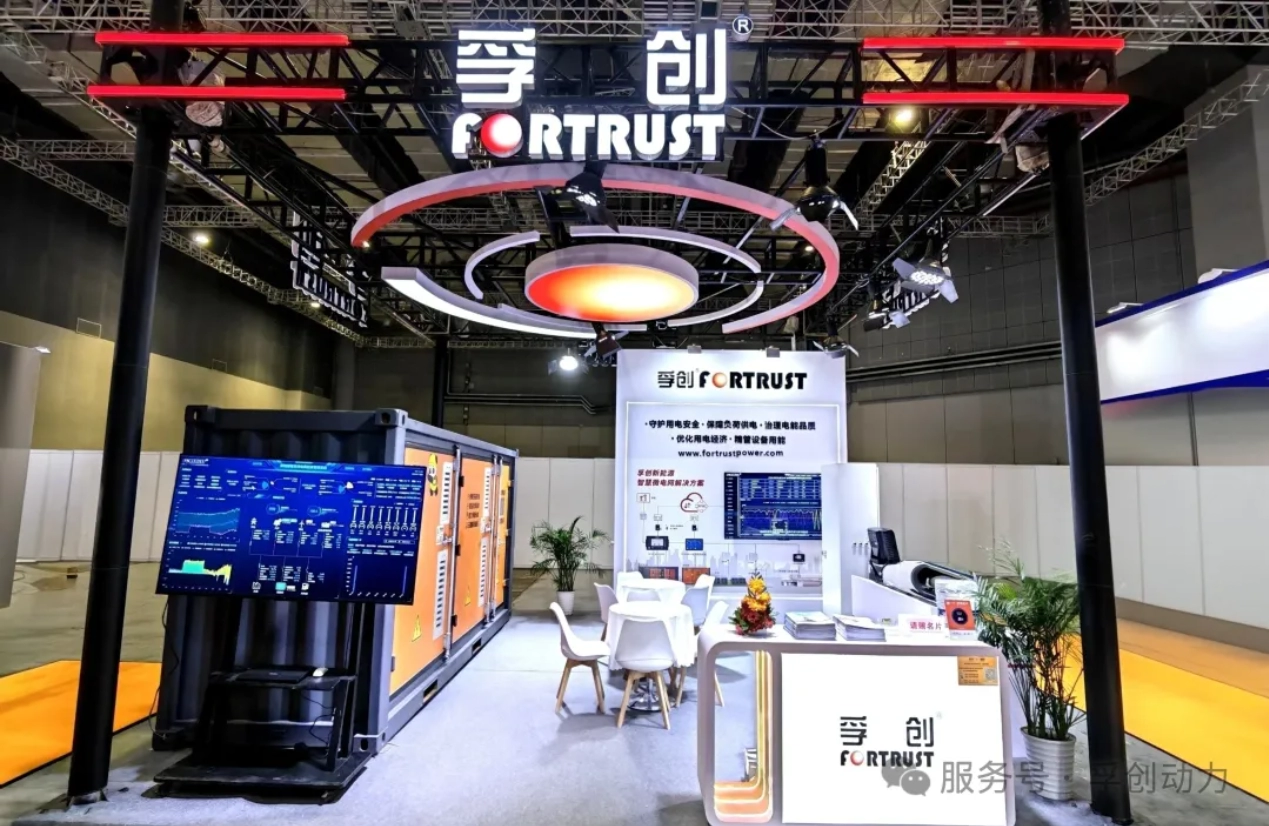
The Fortrust team at Booth S3.B60, with the controller wall, containerized microgrid model and O&M case studies on display.
1. Integrated Microgrid Solution for Off-Grid and Weak-Grid Sites
Fortrust's microgrid solution coordinates diesel and gas gensets, battery energy storage, photovoltaics and wind power in a single dispatch framework, supporting both islanded (off-grid) and grid-connected operation. Energy dispatch and power management are handled automatically, giving mines, remote communities and overseas industrial parks a one-package power supply architecture. At the booth, visitors could walk through a containerized microgrid model and see how the FEMS9607 energy management system and FPCS-100 power coordination controller work together with the GEC and FPSS controller families.
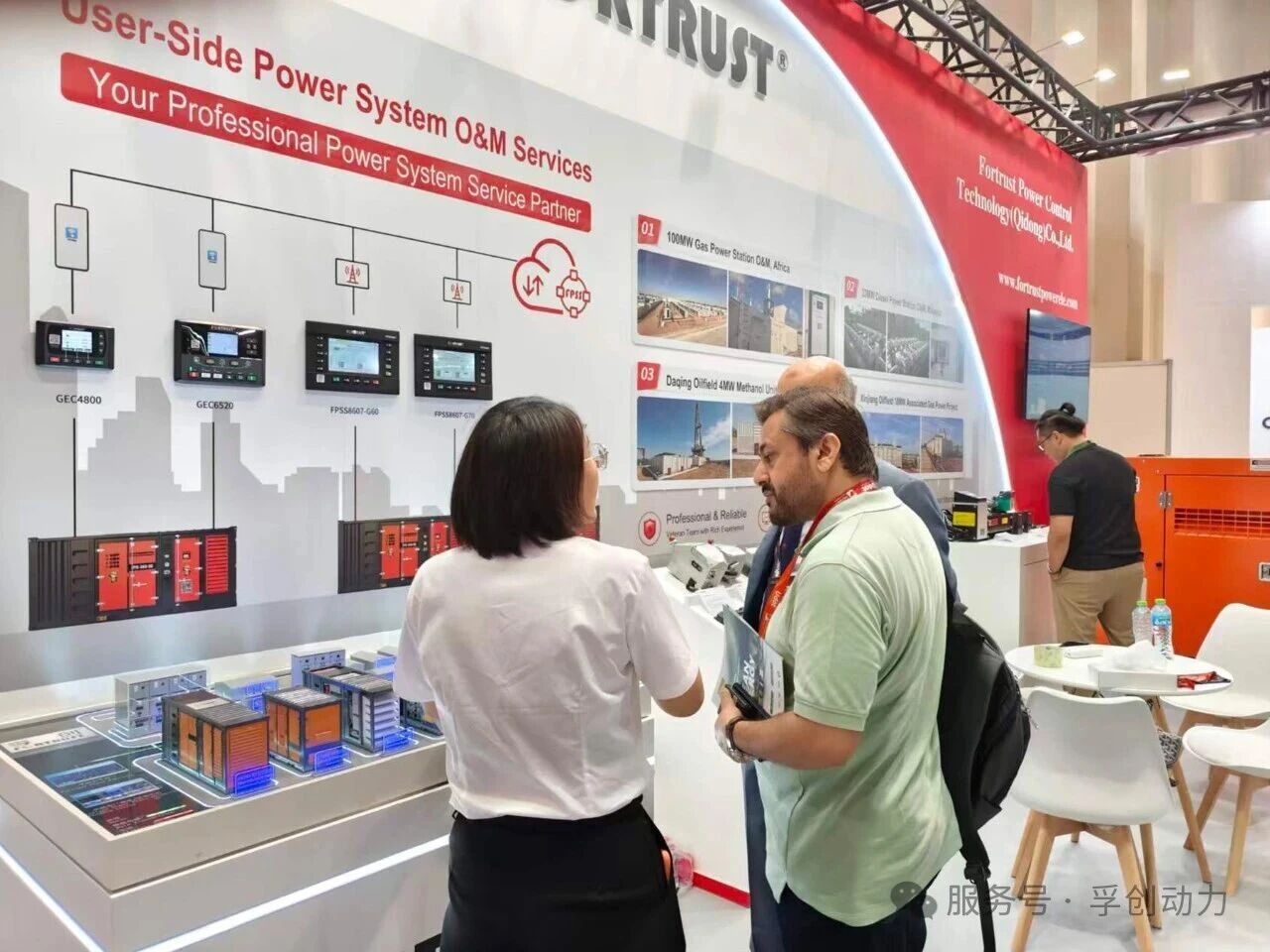
A visitor examines the containerized microgrid model beneath the GEC and FPSS8607 controller wall.
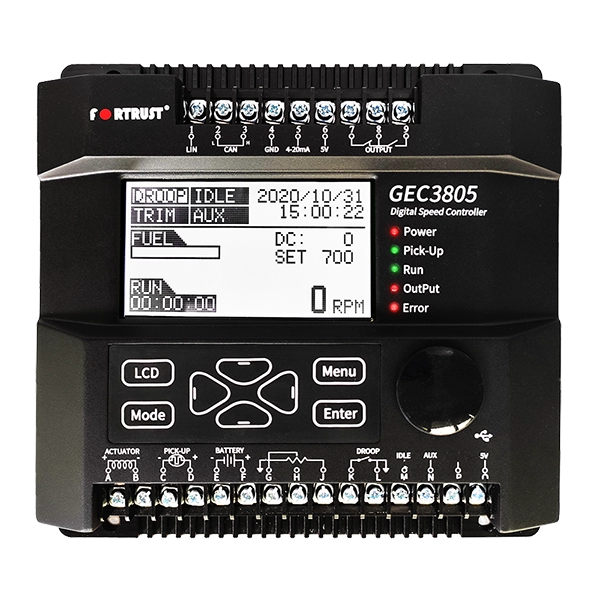
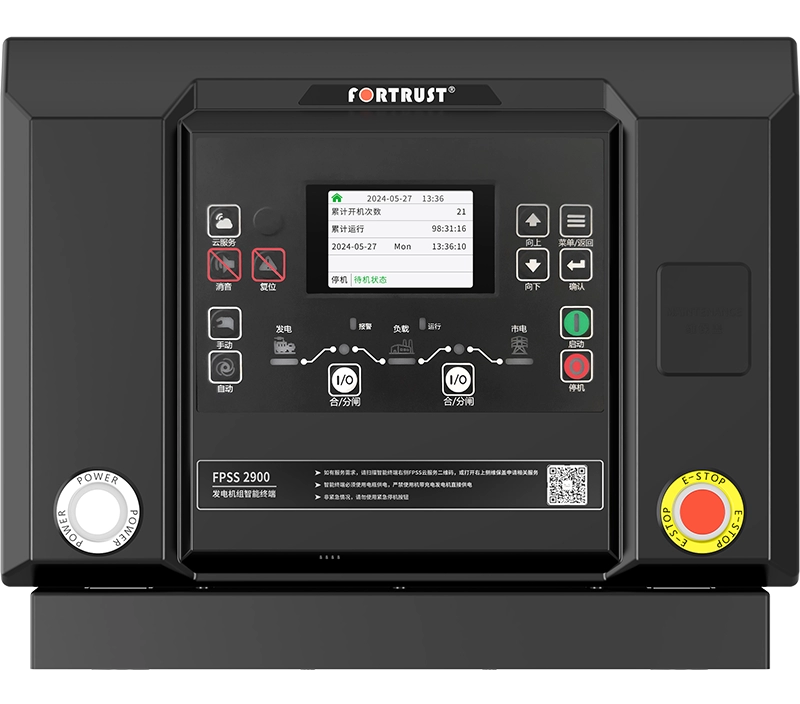
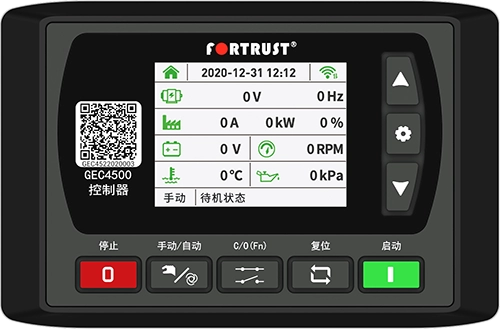
The GEC series — from the GEC2900 and GEC4500 up to the GEC6100D and GEC6500 — together with FPSS8607 intelligent parallel terminals, covers diesel, gas and methanol gensets. Functions include automatic start/stop, full engine and alternator protection, multi-unit paralleling, utility synchronization and continuous data monitoring. These systems are already running in industrial power plants, standby power installations and off-grid projects where downtime is not an option.
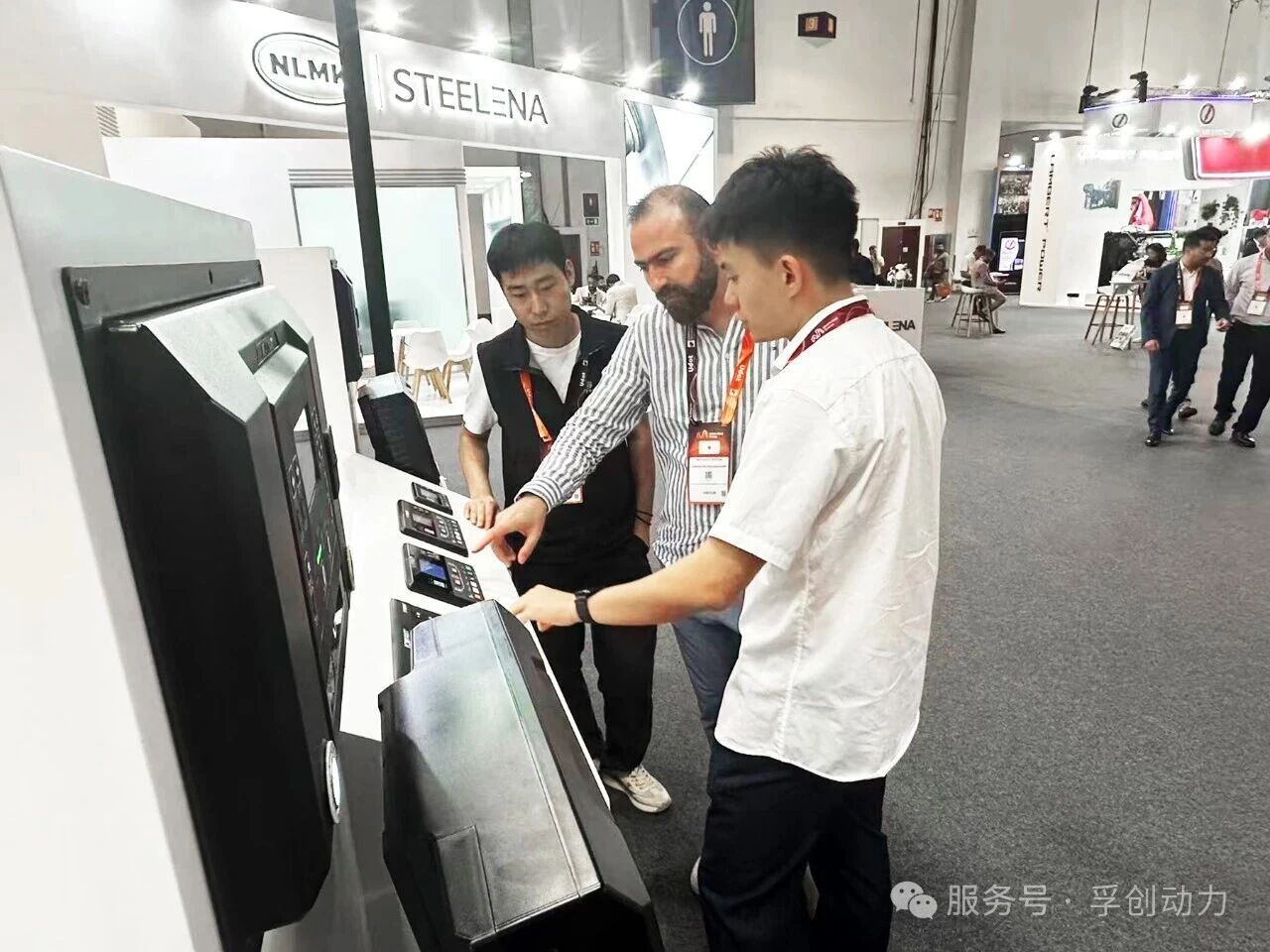
Hands-on controller demonstrations let visitors test start/stop logic, protection settings and paralleling functions.
Hardware is only half of the story. Fortrust's O&M offering covers remote monitoring, fault diagnosis, on-site commissioning, technical training and full-life-cycle operation support. The case wall at Booth S3.B60 showed where this model already works:
100 MW gas power station, Africa — long-term O&M for utility-scale gas-fired generation;
33 MW diesel power station, Malaysia — multi-unit diesel plant with remote monitoring;
4 MW methanol-unit power station, Daqing Oilfield — methanol-fueled generation in an oilfield environment;
Associated-gas power project, Xinjiang Oilfield — turning flare gas into on-site electricity.
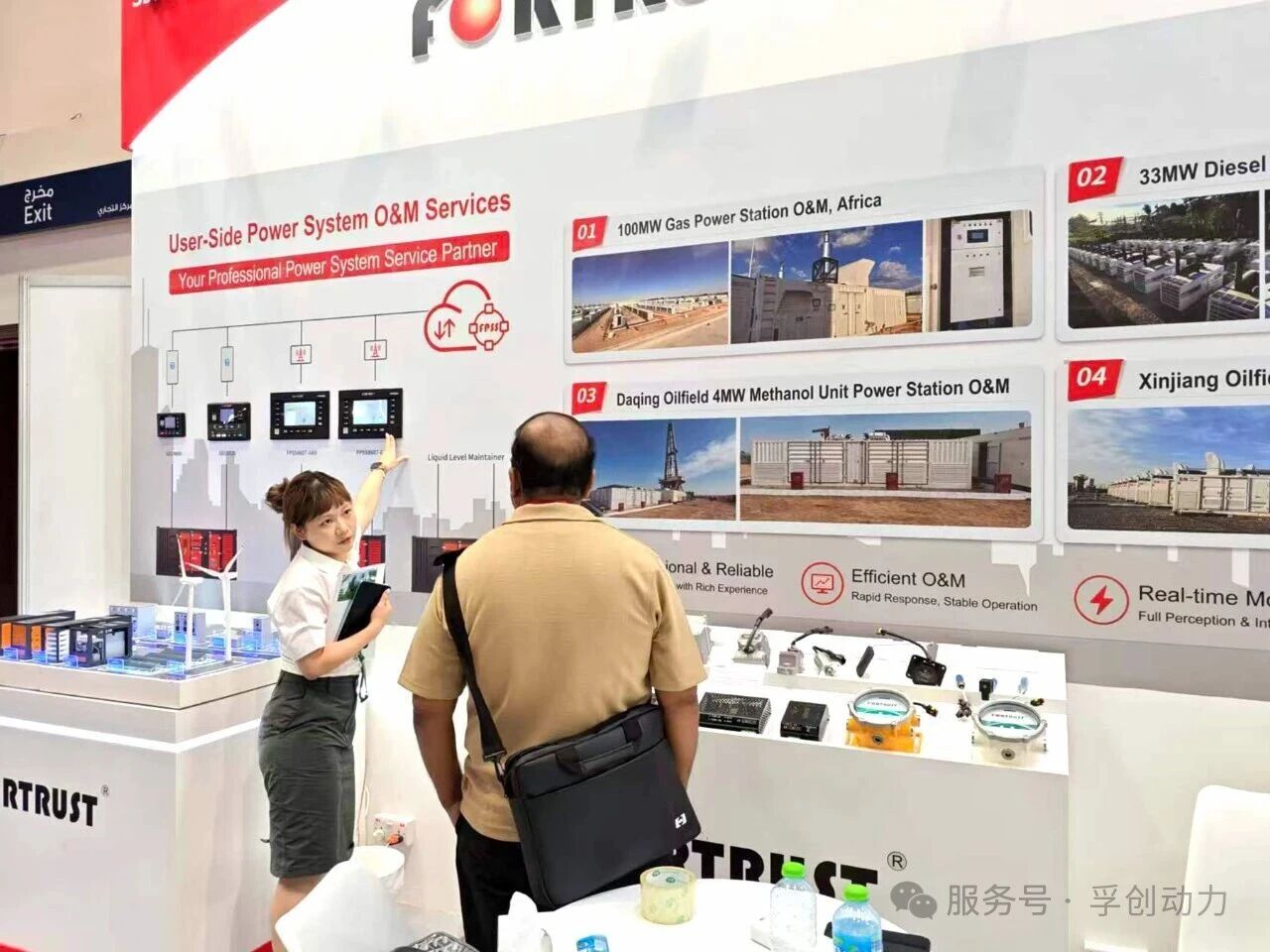
Real O&M references — from a 100 MW gas plant in Africa to a 4 MW methanol-unit station in Daqing Oilfield — anchored most booth conversations.
One question came up again and again at the booth: which power architecture makes sense for a remote site in the Gulf? The honest answer depends on load profile, fuel logistics and uptime requirements — but the comparison below captures what we discussed with project owners throughout the show.
| Dimension | Single diesel genset | Diesel + battery hybrid | Solar–diesel–storage microgrid |
|---|---|---|---|
| Fuel consumption | Highest; engine runs at partial load for long periods | Lower; battery absorbs low-load periods, genset runs in efficient bands | Lowest; solar carries daytime load, storage bridges peaks |
| Uptime & redundancy | Single point of failure without a standby unit | Battery rides through genset start-up and faults | Multiple independent sources; N+1 by design |
| Maintenance burden in 50 °C heat | Frequent oil and filter changes; wet-stacking at low load | Fewer engine hours; battery needs thermal management | Fewest engine hours; remote monitoring cuts site visits |
| Upfront investment | Lowest | Medium | Highest — offset by fuel savings over project life |
| Best fit | Standby and small prime-power loads | Camps, telecom, variable-load industrial sites | Mines, oilfields, island resorts, overseas industrial parks |
Whatever the architecture, the control layer decides whether it actually works in the field. Fortrust's GEC and FPSS controllers, FEMS9607 energy management system and cloud monitoring platform are designed as one ecosystem — which is why many visitors came to the booth with a single genset problem and left discussing a full microgrid.
Across three days, the Fortrust team met project owners, EPC contractors, distributors and rental power operators from the Gulf states, North Africa and neighboring markets. The strongest interest concentrated on three themes: microgrid integration for remote industrial sites, long-term O&M outsourcing for overseas power stations, and controller selection for gas and methanol gensets. Conversations moved quickly from product features to concrete topics — project implementation timelines, adaptation to local grid codes and fuel qualities, and partnership models for localized service.
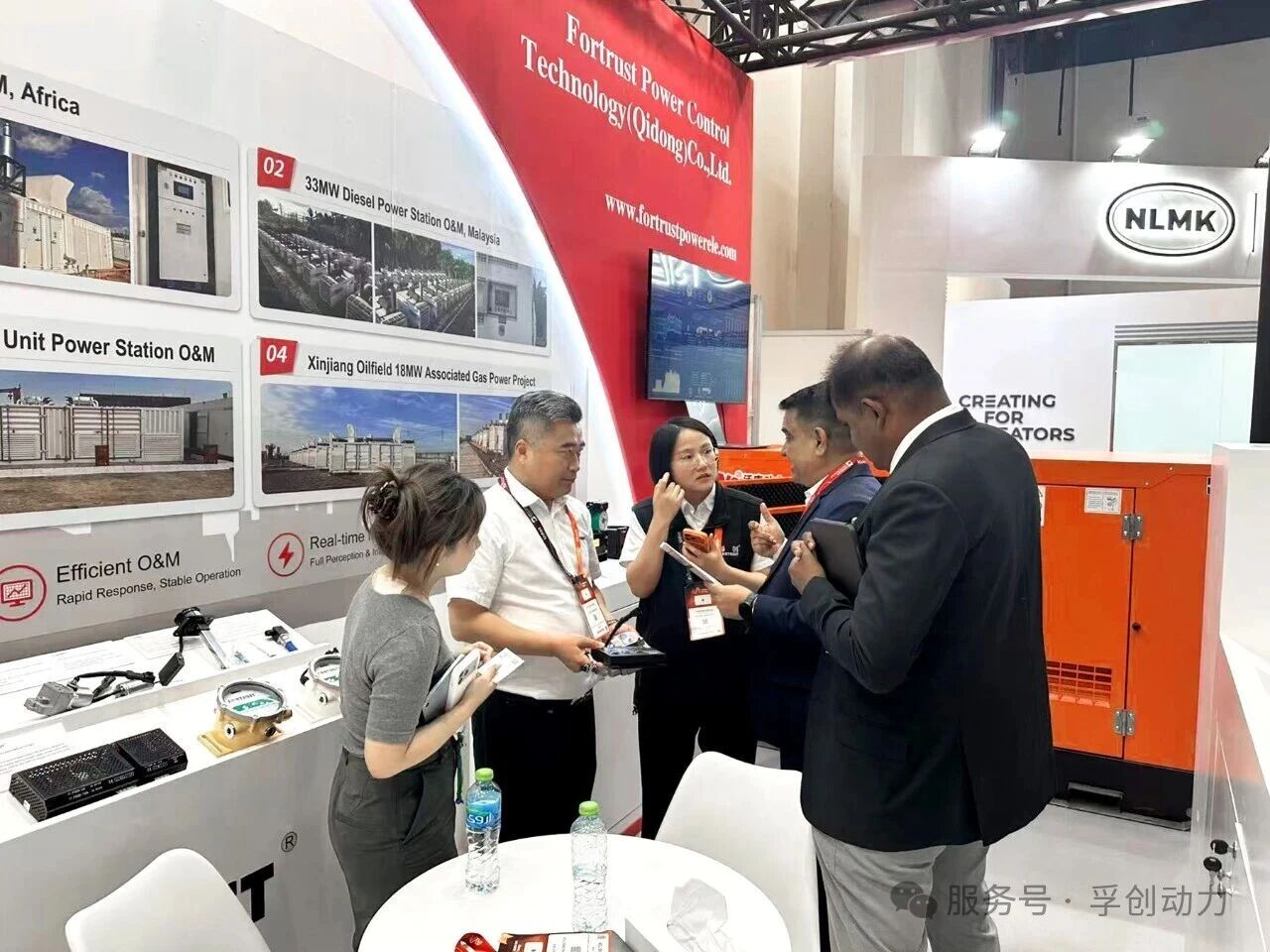
In-depth discussions with Gulf customers covered operating conditions, equipment selection, customized solutions and localized service.
Yes. Our controllers are designed for harsh field conditions, including high-temperature, dusty and high-humidity environments typical of Gulf oilfields, mining camps and outdoor industrial sites. Products on display in Dubai were selected specifically for these duty conditions, and our engineers can advise on cabinet ventilation, derating and installation practice for your site.
The GEC and FPSS families support diesel, natural gas and methanol gensets, including automatic start/stop, protection, multi-unit paralleling and utility grid synchronization. Methanol-unit control is already field-proven in our 4 MW Daqing Oilfield reference project.
Yes. The solution supports both islanded and grid-connected modes. In islanded operation, the FEMS9607 energy management system dispatches gensets, storage, PV and wind automatically to keep frequency and voltage stable while minimizing fuel consumption.
On-site controllers connect to our cloud monitoring platform, giving your team and our engineers real-time status, alarms and historical data. We combine this remote layer with scheduled on-site commissioning, technical training and full-life-cycle support — the same model we run for the 100 MW gas power station in Africa and the 33 MW diesel plant in Malaysia.
We supply and support projects worldwide and are actively expanding distributor and service partnerships across the Middle East and Africa. Discussions initiated at MEE 2026 on localized service are continuing — contact our team to join them.
Email info@fortrust.cn or call +86-21-6806 5446. Tell us about your site conditions — load profile, fuel, ambient temperature and grid access — and our engineers will respond with a recommended configuration and documentation.
MEE 2026 may be over, but the conversations that started in Dubai are just beginning. The Middle East's energy transition is accelerating demand for reliable power control and integrated microgrid solutions — and Fortrust will keep building hardware, systems and O&M services matched to the region's real operating conditions.
Email us at info@fortrust.cn or call +86-21-6806 5446 to continue the conversation started at Booth S3.B60.
Visit our website: www.fortrustpowerele.com
Request a ConsultationFortrust Power Control Technology (Qidong) Co., Ltd. | No. 49, Mingzhu Road, Qidong City, Nantong, Jiangsu, China
Generator set controllers · Microgrid solutions · Power plant O&M services