

 中
中 英
英



Ensuring power supply demonstrates responsibility; enterprises extend their regards to those in military uniforms.
Company News
2025.08.01


When the normal power supply fails, a generator set needs to respond quickly and in a controlled manner. Manual operation can introduce delays and depends heavily on the availability of trained personnel. A generator set controller provides the control logic required to monitor power conditions, initiate genset starting, supervise operation, and complete a controlled shutdown when normal power returns.
Fortrust provides generator control solutions designed to coordinate these essential operating functions. By connecting electrical monitoring, engine feedback, protection functions, alarms, and communication capabilities, the controller helps make generator operation more consistent. This is especially valuable for standby power applications where the genset may remain inactive for long periods but must be ready to operate when a power interruption occurs.
Automatic operation begins with monitoring the incoming power supply. The controller continuously checks configured electrical conditions and determines whether the supply remains within the required operating range. When the monitored conditions indicate a genuine power failure, the controller can initiate the programmed automatic start sequence.
This process is more controlled than simply responding to every short voltage fluctuation. Configurable thresholds and timing functions help distinguish an actual power interruption from a temporary disturbance. As a result, the automatic generator controller can avoid unnecessary starting and stopping while maintaining a predictable response when the power supply is genuinely unavailable.
For applications requiring automatic mains failure functionality, this monitoring capability becomes an important part of the overall operating sequence. The controller evaluates the power condition first, then coordinates the subsequent starting process according to the configured requirements.
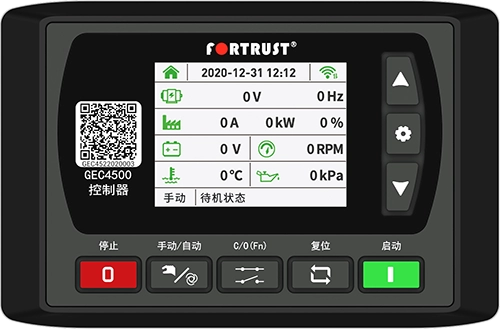
After confirming the start condition, the genset controller initiates the programmed starting sequence. The controller sends the appropriate start command and monitors available feedback to determine whether the genset has responded correctly. This allows the starting process to be controlled rather than relying solely on a basic start signal.
During startup, the controller can monitor relevant engine and electrical information. If the expected running condition is not achieved, the configured starting logic can manage further attempts where applicable. This is particularly useful for standby generators that may not operate for extended periods and therefore need dependable automatic starting when required.
Once successful operation is confirmed, the controller moves from the starting stage into normal running supervision. This transition is important because sending a start command does not by itself confirm that the generator is ready to operate. Feedback and status monitoring provide a more complete picture of the genset's actual condition.
After startup, automatic control continues throughout the running period. The controller monitors available operating information and checks configured alarm and protection conditions. Instead of treating starting as the end of the process, it maintains supervision while the generator set is supplying power.
A capable generator control unit can respond to abnormal conditions according to its programmed functions. Warning information can alert operators to developing problems, while configured shutdown conditions can help protect the equipment when continued operation is unsuitable. These functions are particularly important when the generator is operating without someone standing beside it.
Monitoring also creates a clearer operating record for maintenance personnel. Status information and fault indications can help technicians understand whether the genset is running normally or whether attention is required. This makes the controller an important interface between the generator set and the people responsible for its operation.
When the normal power supply returns, the controller continues monitoring the incoming electrical condition rather than stopping the genset immediately. A configured delay can be used to confirm that the restored supply is stable. This helps prevent repeated transfer and shutdown actions when the utility supply remains unstable.
After the return of normal power has been confirmed, the required load transfer sequence can take place according to the application configuration. The generator can then continue operating for the required period before the stop command is issued. This controlled approach allows the genset to complete its operating cycle in an orderly manner.
The final stop sequence is therefore more than simply switching off the engine. The automatic genset control process coordinates power restoration, operating delays, and shutdown conditions so that the generator can return to its standby state in a predictable manner.
| Operating stage | Controller function | Main objective |
|---|---|---|
| Power monitoring | Checks incoming supply conditions | Identify power interruption |
| Start decision | Evaluates configured conditions | Confirm automatic start |
| Starting | Sends start commands and monitors feedback | Establish genset operation |
| Running | Monitors status, alarms, and protection conditions | Maintain controlled operation |
| Power restoration | Confirms stable normal supply | Prepare for return to normal power |
| Shutdown | Executes configured stop sequence | Return genset to standby |
Automatic starting alone does not provide complete generator control. Once the genset begins operating, the controller needs to supervise available signals and identify conditions that may require operator attention or protective action. This can include engine-related warnings, abnormal electrical conditions, overspeed, low oil pressure, high temperature, and other configured signals depending on the generator and control arrangement.
The value of protection functions becomes especially clear when the generator operates without continuous supervision. A generator set controller can provide alarm indications and programmed responses when operating conditions move outside defined limits. This helps reduce dependence on manual observation and gives maintenance personnel clearer information when troubleshooting is required.
Protection and monitoring should therefore be considered together with automatic start and stop functions. A controller that coordinates these functions can provide a more complete approach to genset operation without turning the control process into a collection of disconnected features.
Remote access can further improve the way generator sets are managed, especially when equipment is installed across multiple locations or in areas that are not continuously staffed. Depending on the selected configuration, a controller can provide access to genset status, operating information, alarms, and control functions through suitable communication connections.
Fortrust's generator control solutions can support communication functions such as RS485 and Modbus, while selected configurations can also support remote monitoring and control through cellular communication. These capabilities allow authorized personnel to access important genset information without always needing to inspect the equipment locally.
Remote monitoring is particularly useful for identifying operating status and abnormal conditions. Instead of discovering a problem only during a scheduled inspection, operators can use available communication functions to obtain information earlier and arrange appropriate maintenance when necessary.
Different generator applications require different control functions. Some installations may primarily need automatic starting and stopping, while others may require automatic mains failure monitoring, remote communication, fault records, engine protection, or integration with external equipment.
When selecting a generator set controller, the first consideration should be the required operating sequence. Buyers should determine whether automatic mains monitoring is needed, what signals are available from the generator, whether remote monitoring is required, and which communication interfaces are necessary.
Compatibility is equally important. The controller should match the electrical configuration, available engine signals, operating requirements, and intended control method of the generator set. Choosing a controller based only on the number of features can create unnecessary complexity, while selecting one with insufficient functionality can limit the performance of the installation.
Automatic generator control is useful wherever standby power needs to respond without depending entirely on manual intervention. Commercial facilities, industrial sites, infrastructure facilities, telecommunications locations, and other applications can benefit from a controller that coordinates power monitoring and genset operation.
The greatest value comes from having a consistent operating sequence. The controller can detect abnormal power conditions, initiate starting, verify operation, monitor the genset, respond to configured alarms, recognize power restoration, and complete the shutdown process. Each stage supports the next, creating a more predictable operating cycle.
Fortrust focuses on practical generator control solutions that bring these functions together. With appropriate configuration, a generator set controller can help operators manage automatic starting and stopping while also improving access to genset status, protection information, and remote control functions.
Reliable automatic operation depends on coordination rather than a single function. Power monitoring must correctly identify the start condition, the starting sequence must be properly configured, feedback must confirm successful operation, and protection functions must remain active while the genset is running.
The shutdown sequence requires the same attention. After normal power returns, the controller should verify the restored supply and follow the configured transfer, delay, and shutdown process instead of immediately stopping the genset. This helps create a controlled transition from generator operation back to standby status.
By combining automatic control, monitoring, protection, and communication capabilities, Fortrust helps provide a practical approach to generator set management. The result is a control solution designed around the actual operating process of the genset rather than a simple start-and-stop command.
A generator set controller manages key genset functions including automatic starting, running supervision, alarm handling, protection, and controlled shutdown. Depending on the configuration, it can also support mains monitoring and remote communication.
The controller monitors configured incoming power conditions. When the conditions meet the programmed criteria for a power failure, it can initiate the automatic starting sequence.
The controller can use configured timing to confirm that the normal power supply has returned and remains stable. The genset can then complete the required transfer and shutdown sequence.
Yes. Depending on the selected configuration, communication interfaces such as RS485 and Modbus can support external monitoring, while compatible communication functions can provide additional remote monitoring and control capabilities.
Consider automatic start and stop requirements, mains monitoring, available generator signals, protection functions, communication interfaces, remote monitoring requirements, and compatibility with the generator's electrical configuration.
A controlled shutdown helps the genset return to standby operation in an orderly manner after normal power is restored. It also allows configured delays and operating conditions to be completed before the generator stops.