

 中
中 英
英



Rotary Electric Actuator for Electronic Engine Governor Systems
News and Exhibitions
2026.08.24


Generator equipment is often deployed in locations where continuous supervision is difficult, yet stable operation is essential for power continuity. Traditional monitoring methods depend heavily on local inspection, manual data collection, and separate communication devices, making it difficult to obtain timely operating information. An industrial IoT gateway provides a practical connection between generator controllers, communication networks, and remote monitoring platforms, allowing operational data to be transferred continuously for faster equipment supervision.
For facilities managing multiple generating units or geographically distributed equipment, remote visibility can significantly improve maintenance coordination and operational awareness. Instead of relying only on information available at the control panel, an industrial IoT gateway for generator monitoring can collect relevant operating data and transmit it through available communication networks. This creates a more connected approach to equipment management while reducing dependence on frequent physical inspections.
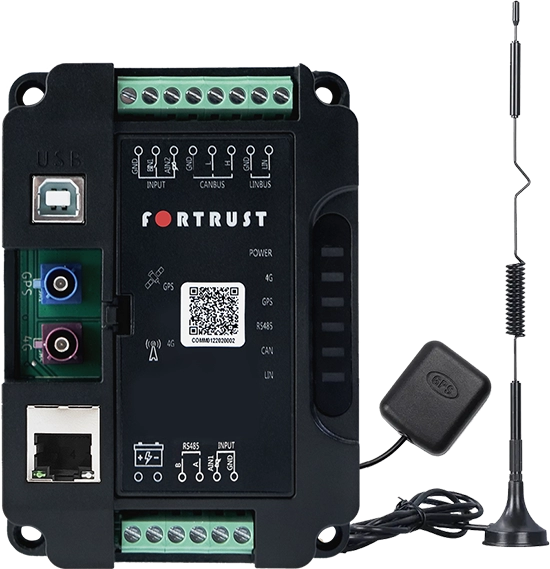
The primary role of industrial IoT gateway is to connect field equipment with remote data services while handling communication between different interfaces and networks. Generator controllers can communicate with the gateway through industrial interfaces such as RS485 or CAN, while Ethernet or cellular connectivity can be used to transfer information to remote platforms.
This communication structure allows important operating information to move from the generator controller to authorized monitoring terminals. Depending on the connected controller and configuration, users can access operating status, alarms, historical records, and other available parameters from computers or mobile devices. The result is a more direct method of real time generator monitoring without requiring personnel to remain beside the equipment.
Industrial equipment rarely relies on a single communication protocol. Generator controllers may use different interfaces depending on their architecture, while remote monitoring applications may require Ethernet or cellular communication. An industrial gateway helps bridge these different communication requirements, making it easier to connect field controllers with remote monitoring infrastructure.
RS485 is widely used in industrial communication because it supports stable data transmission over suitable distances, while CAN communication is commonly adopted for controller-to-controller data exchange. By supporting multiple interfaces, a generator communication gateway can provide greater flexibility when integrating monitoring equipment with existing control architecture.
| Communication Function | Operational Value |
|---|---|
| RS485 communication | Connects compatible industrial controllers and devices |
| CAN communication | Supports controller data exchange |
| Ethernet connectivity | Provides wired network communication |
| 4G connectivity | Enables remote data transmission where cellular networks are available |
| GPS and BeiDou positioning | Provides location information for connected equipment |
| Digital alarm input | Supports monitoring of selected external alarm conditions |
A major advantage of industrial IoT gateway for generators is its ability to create a communication path between local controllers and remote monitoring platforms. The gateway can receive data from compatible controllers and forward it through the selected communication network, allowing operational information to be accessed away from the equipment location.
This approach is particularly useful when equipment is installed across different rooms, buildings, facilities, or operating areas. Remote users can review available generator information without depending entirely on local personnel. When configured with compatible control equipment, remote functions can also support selected parameter adjustments and operational commands, helping maintenance teams respond more efficiently.
Real time monitoring is valuable because generator conditions can change rapidly during operation. Waiting for periodic inspections can delay the identification of abnormal operating conditions, while continuous data transmission provides a more current view of equipment status. An IoT gateway for generator monitoring helps make this information available through connected terminals.
The value of monitoring extends beyond simply displaying data. Operating records can support trend analysis, maintenance planning, alarm review, and equipment performance evaluation. When historical information is available, maintenance personnel can compare operating conditions over different periods and make decisions based on recorded information rather than isolated observations.
Distributed equipment creates additional challenges for maintenance teams. When generating units are located in different areas, frequent physical inspections require additional labor and travel time. A remote generator monitoring gateway can reduce this dependency by transmitting equipment information to a centralized monitoring environment.
With mobile and computer access, authorized personnel can review available operating information remotely. This makes it easier to prioritize on-site inspections, identify equipment requiring attention, and coordinate maintenance activities according to actual operating conditions.
Equipment location is another important consideration when generators are distributed across multiple operating areas. An industrial IoT gateway equipped with positioning capabilities can provide geographic information through GPS and BeiDou services. This information can help users associate operational data with the corresponding equipment location.
Location information can also support asset visibility and electronic fence functions where required. Instead of viewing equipment data without geographic context, operators can associate monitoring information with a specific operating location. This adds another layer of visibility for organizations managing geographically dispersed generating equipment.
Remote monitoring becomes more valuable when it contributes directly to maintenance and operational workflows. An industrial IoT gateway for remote monitoring can provide access to available operating data, alarms, and historical records, helping technical personnel determine whether an issue requires immediate attention or scheduled inspection.
Remote functions may also support parameter modification and control operations when the connected controller and configuration allow these capabilities. This can reduce unnecessary site visits for certain tasks while giving technical teams better access to equipment information before they arrive on-site. Remote software upgrade capability can further simplify maintenance activities by reducing the need for manual intervention at each connected location.
Generator monitoring does not always stop at the generator controller. Auxiliary conditions around equipment can also affect operational safety and maintenance requirements. An industrial IoT gateway with digital alarm inputs can be connected to selected external signals, allowing users to monitor conditions such as access status, security alarms, or fire-related signals where appropriate.
This broader connectivity makes the gateway useful as a communication interface between generating equipment and associated facility signals. By bringing relevant information into the same remote monitoring workflow, maintenance personnel can gain a more complete understanding of the conditions surrounding connected equipment.
Choosing an industrial IoT gateway requires more than checking the number of communication interfaces. Compatibility with the generator controller, available network infrastructure, operating environment, power supply, and required monitoring functions should all be considered before deployment.
The gateway should provide suitable communication interfaces for the existing controller while supporting the network connection available at the installation location. Environmental requirements are also important because industrial equipment may operate under changing temperature and humidity conditions. A compact design can simplify installation where control cabinets or equipment enclosures have limited internal space.
| Selection Factor | What to Consider |
|---|---|
| Controller compatibility | Confirm communication interfaces and supported controller connections |
| Network access | Evaluate Ethernet and cellular connectivity requirements |
| Remote monitoring | Check access to real time status, alarms, and historical information |
| Positioning | Consider GPS or BeiDou requirements for distributed equipment |
| Remote maintenance | Evaluate parameter adjustment and software upgrade capabilities |
| Environmental conditions | Match operating temperature and humidity requirements |
| Installation space | Consider gateway dimensions and enclosure layout |
A well-designed monitoring architecture should allow field equipment, communication networks, and remote users to exchange information efficiently. The industrial IoT gateway serves as an important connection point within this architecture, translating field-level communication into a format suitable for remote transmission.
For generator operators, the goal is not simply to add another communication device. The greater value comes from improving equipment visibility, shortening the distance between operational data and technical decisions, and creating a more efficient way to manage distributed assets. With suitable controller compatibility and network infrastructure, an industrial IoT gateway for real time monitoring can become an important part of generator connectivity.
As generator installations become increasingly distributed and maintenance teams seek faster access to operational information, remote connectivity is becoming an increasingly important consideration. Continuous communication can improve visibility, support maintenance decisions, and reduce dependence on manual inspections.
Fortrust provides generator monitoring and communication solutions designed to connect compatible control equipment with remote monitoring applications. By combining industrial communication interfaces, network connectivity, positioning capabilities, and remote access functions, an industrial IoT gateway can help organizations manage generator equipment with greater visibility and operational efficiency.
An industrial IoT gateway connects generator controllers with communication networks and remote monitoring platforms. It can collect available equipment data and transmit operational information for remote access, monitoring, and maintenance management.
Depending on controller compatibility, communication can use industrial interfaces such as RS485 and CAN. The gateway can then transmit collected information through Ethernet or cellular networks to an appropriate remote monitoring platform.
Yes, when the connected controller and configuration support the relevant functions. Remote capabilities can include selected parameter adjustments, control operations, monitoring, and software upgrades.
Positioning information helps users identify the geographic location of connected equipment. This can be useful for distributed assets and applications requiring location visibility or electronic fence functions.
Compatible digital inputs can be used to monitor selected external signals, such as access, security, or fire-related alarms. This allows relevant auxiliary conditions to be incorporated into the remote monitoring workflow.